The bus from Siena smelled of diesel and somebody's lunch, and the driver took the curves above the clay hills as if he had a grudge against each one of them.
I had been awake for twenty-six hours. I had flown out of Boston with a carry-on, a suitcase that weighed exactly forty-nine pounds, and a folder of court papers in an Italian I read the way I read prescriptions from very old doctors: slowly, with suspicion, guessing at the worst words. Somewhere over the Atlantic I had decided I was done crying about any of it. Somewhere over the Alps I broke that promise into a paper napkin, quietly, and the man in the next seat pretended to be asleep. I liked him for that.
Now the hills went gold and gray outside the window, the fields plowed into long pale ridges, and far off on the horizon Monte Amiata lay against the sky like a sleeping animal. My grandmother used to tell me the mountain was a woman lying on her side. When I was nine I could see her. At thirty-six, jet-lagged, I mostly saw a mountain.
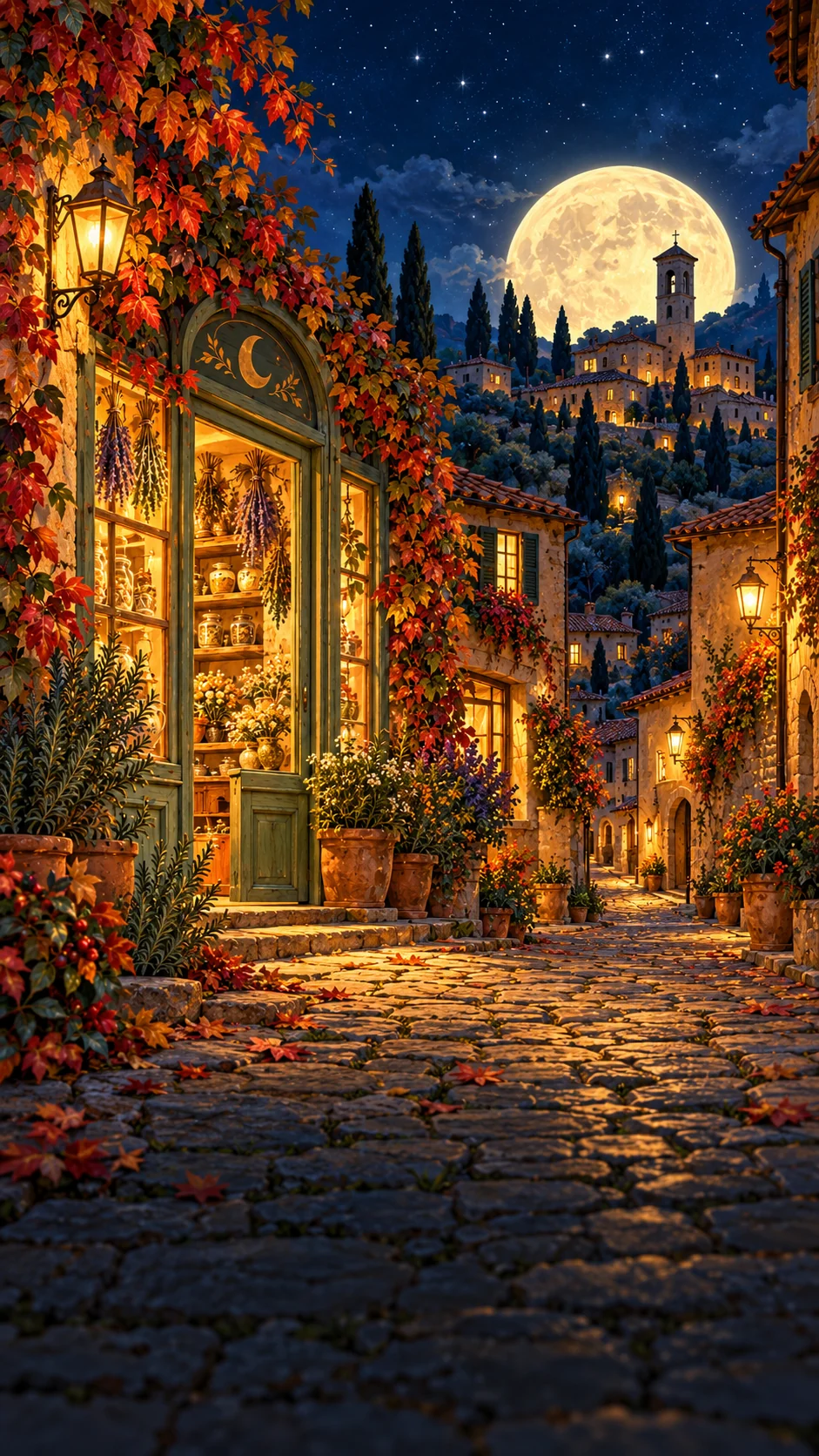
Vallerba came up all at once, the way hill towns do. One minute there was nothing but cypresses and a road sign peppered with old buckshot. The next there were walls, a stone gate, and a bell tower the color of bread crust. The bus wheezed into the square and stopped beside a fountain that wasn't running.
"Vallerba," the driver said. He said it to me, because I was the only passenger left.
"Grazie."
He looked at my suitcase, then at me, then at the cobblestones. "Auguri," he said. It means best wishes. The way he said it, it meant good luck with that, and I decided not to take it personally.
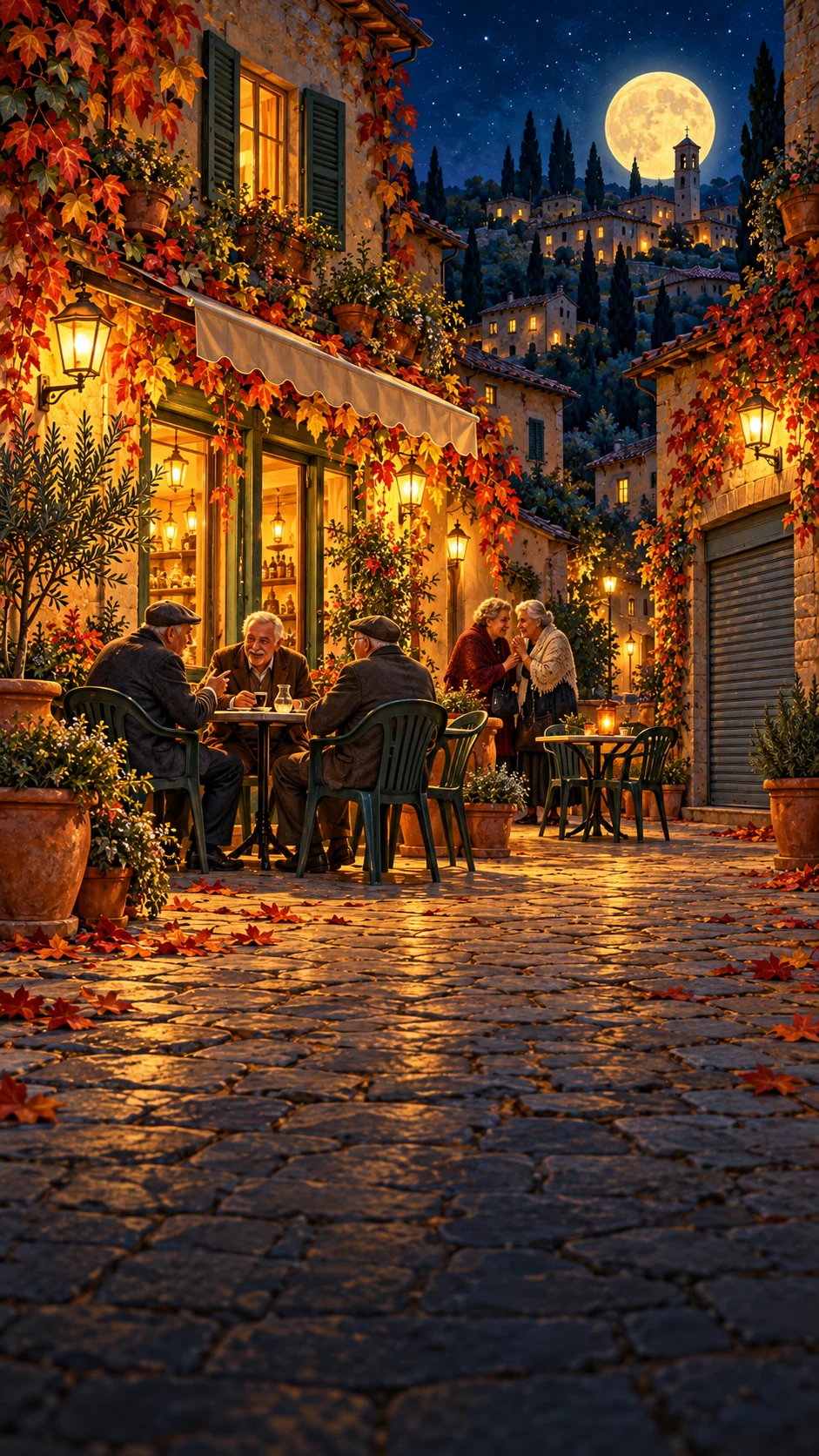
The piazza was smaller than I remembered, and exactly the same. The church of San Lucio on one side with its doors shut. The town hall with two flags hanging limp in the evening air. A pharmacy with a green neon cross that blinked on as I watched, which made me feel briefly and absurdly at home. On the town hall door somebody had taped a poster for the Festa della Vendemmia, the middle of October, with a bunch of grapes drawn by someone who had clearly never met one. And on the corner, under a faded awning, the Bar Centrale, with three plastic tables outside and an old man at each one, as if they had been issued one per table.
All three of them stopped talking when I dragged my suitcase across the stones. The wheels made a noise like a small airplane taxiing.
"Buonasera," I said.
"Buonasera," they said, in three different keys, and went on looking.
Inside, the bar smelled of coffee and anise and floor cleaner. Behind the counter a woman in a flowered apron was drying a glass with the concentration of a surgeon. She was small and round and seventy if she was a day, with hair dyed stop-sign red. When she saw me she put the glass down so hard I thought it would crack.
"Oh," she said. "Oh, look at you. You're Erminia's."
I had prepared a speech. It was in my phone, in Italian, with the hard words spelled out phonetically. I didn't need any of it. Assunta came around the counter and took my face in both her hands, and her hands smelled of lemons, and she said my name as my grandmother had, with all four syllables. Fi-lo-me-na.
"Mina," I said. "Everybody calls me Mina."
"Everybody in America." She let go of my face so she could inspect the rest of me. "You're thin. You were never thin."
"It's the flight."
"It's America," she said, and poured me a coffee I hadn't asked for.
I should explain about my Italian. I speak what my father called kitchen Italian. I can ask for bread, argue about salt, and tell you that the sauce needs another hour. Past that, I hold on by my fingernails. Assunta talked fast and kindly, in a Tuscan that swallowed its c's whole, and I understood about two-thirds of it and guessed the rest from her hands. I'll tell it as I understood it. It's the only way I can.
What I understood was this. The bus was late, as always. The judge in Siena who signed my papers was a good man ("he's nobody's cousin, so he's honest"). And my uncle Renzo had meant to meet me himself. It was Renzo who had gone to the court in Siena and asked for me. I still didn't entirely know why.
"But it's the harvest," Assunta said, spreading her hands. "The grapes don't wait for Americans. They're picking up at the farm until dark. Tommaso was supposed to come."
"Was he?"
She made a small movement with her mouth that in any language meant Tommaso.
"He'll come to the harvest dinner tomorrow. He'll say he forgot. He'll bring wine." She sighed. "He's not bad. He's twenty-nine."
She said it like a diagnosis. Then she reached under the counter and came up with a ring of keys as big as my fist.
"She gave them to me," Assunta said. "The week before. She said, if I'm not here, give these to the girl." Her voice wobbled and recovered. "I said, where would you be? Eighty-four years old, where are you going? Dancing?"
I held the keys. They were warm from sitting under the coffee machine. There were six of them, iron and brass, and one had a paper tag tied on with string. In my grandmother's slanting hand it said cantina. The cellar.
"Assunta," I said. "The Carabinieri. They really think she fell in the river?"
Out on the terrace the three old men had gone very quiet. I could see their backs through the glass, straight as altar boys.
The excerpt ends here. Mina’s journey is only beginning.